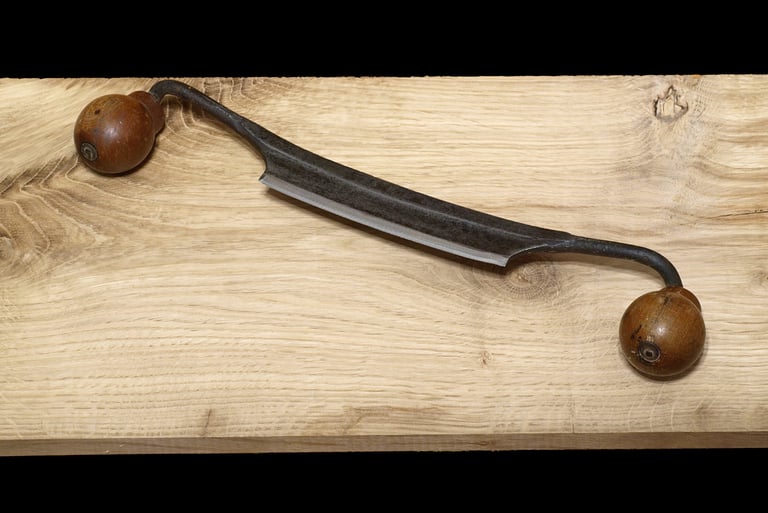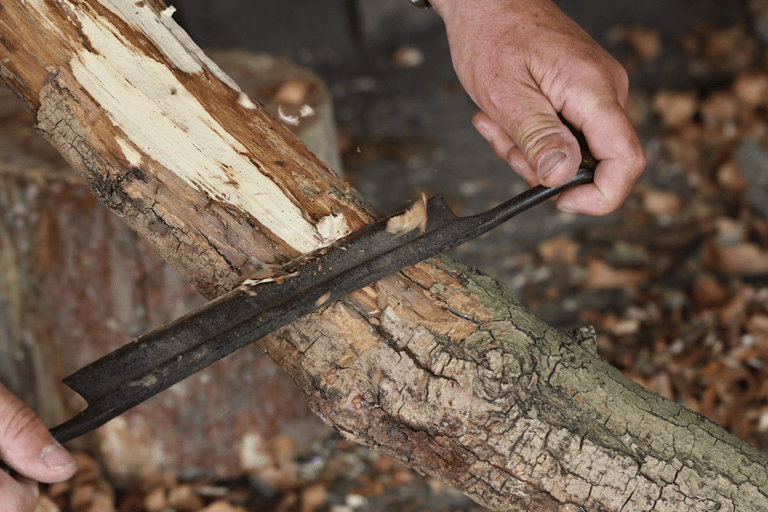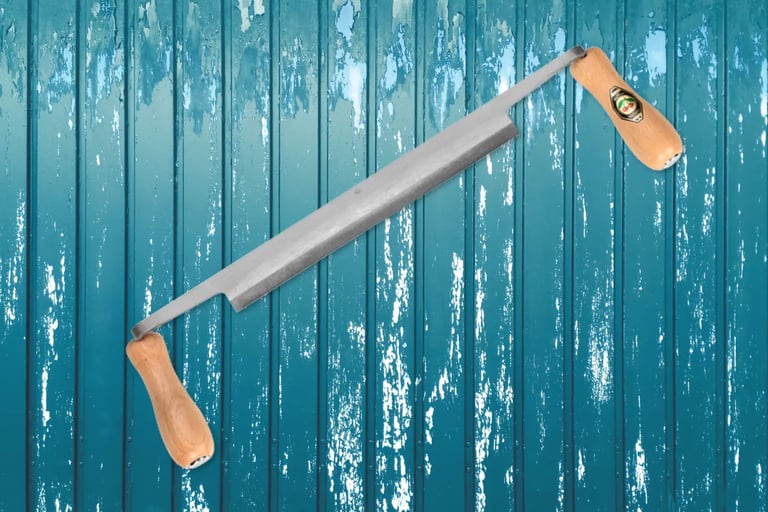
Drawknives are an extremely versatile woodworking tool that is used to shape bark and wood by removing shavings from a log. Drawknives consist of a handle at each end, allowing for easy control and ease of maneuverability. This traditional hand tool is specifically designed to have a longer cutting edge compared to its depth. You use the draw knife by pulling the blade toward you.
The user grips both handles and applies pressure, the user is then able to remove thin layers of wood, resulting in a smooth and precise finish. You can use drawknives to shape wooden furniture, carving intricate designs, or creating intricate wooden pieces, the drawknife is an essential tool for woodworkers.
Its sharp blade and ergonomic design make it ideal for both beginners and experienced craftspeople.
Rad's drawknives are crafted from high-grade steel, ensuring exceptional durability and quality. These tools are specifically designed for timber crafters to efficiently remove bark from branches, trees, trunks, and logs. Additionally, a drawknife can be utilized for removing timber and bark when working with beams, creating didgeridoos, sculpting, and crafting bows and arrows.kn are also excellent for shaping smoothing various types of wood.
Whether you are an experienced woodworker or a beginner, Rad drawknives offer a reliable and efficient solution for all your carving needs. With our drawknives, you can undertake your woodworking projects, assured that you have selected the ideal tool for the task.
Originally known as "drawing knives," drawknives typically consist of curved or flat blades and are available in various sizes. The blades usually feature a bevel-ground front edge and a chisel-like shape. The tapered tangs at both ends of the blade are commonly equipped with wooden handles.
Drawknives have been utilized throughout history and were extensively employed in medieval Russia for smoothing surfaces after the use of an axe or adze. A drawknife is part of a collection of Viking shipwright's tools dating back to approximately 100 AD and is currently exhibited at the State Historical Museum in Stockholm. Although there are no depictions this tool in medieval illustrations from regions, it played a vital role in various woodworking trades. Craftsmen such as bow makers, wheelwrights, carpenters, clog makers, turners, and joiners were proficient in the effective use of the drawknife. Its significance and functionality establish it as an indispensable tool in woodworking.
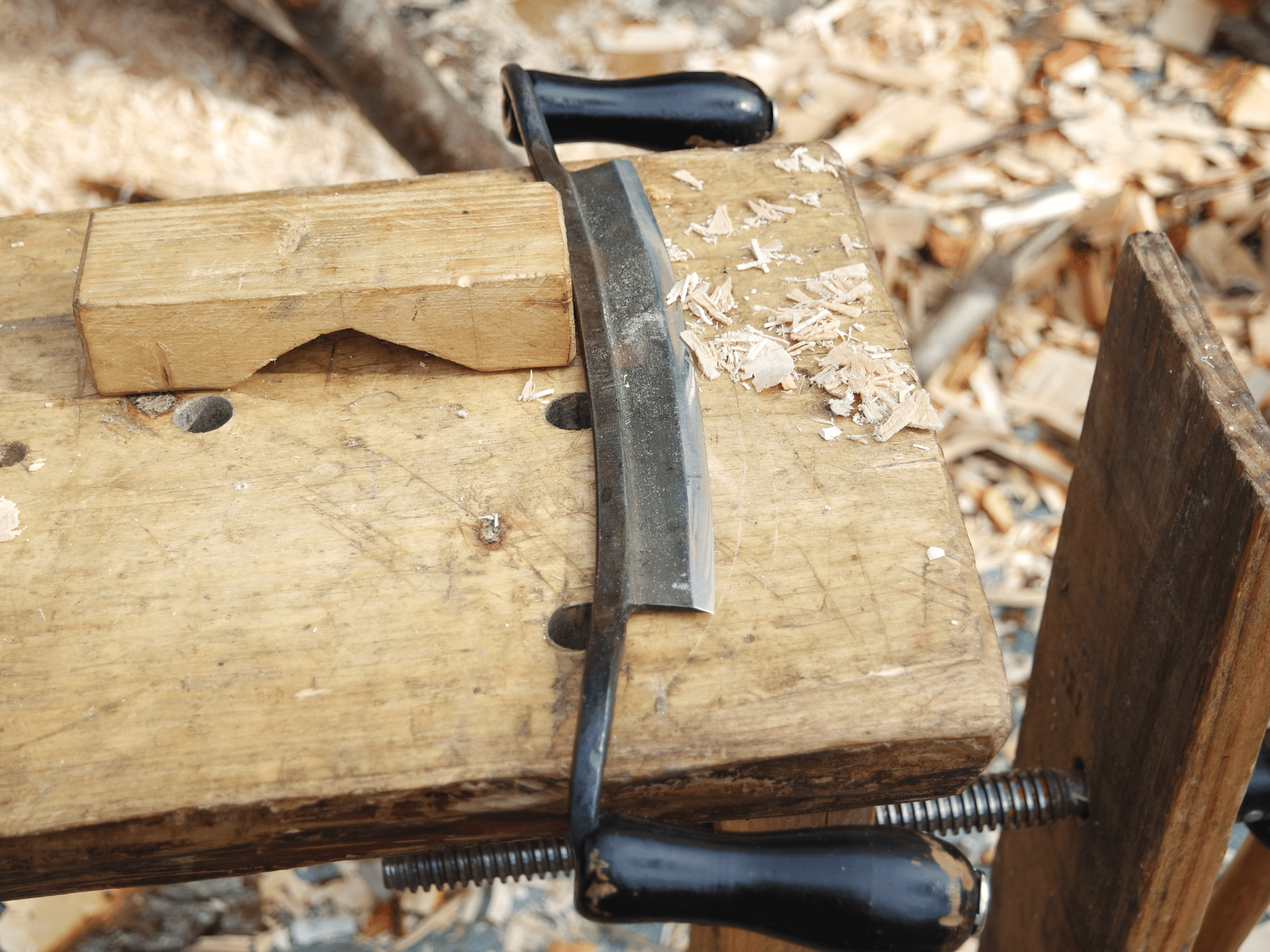
When utilizing a drawknife, it is crucial to adhere to a precise technique to ensure the best results. Begin by working from the center of the piece toward the end, as this approach provides greater control and accuracy. Once the end is reached, the piece should be reversed in the shaving horse or vise, and the procedure repeated, starting near the center and working outward to the opposite end once more.
This guarantees an even and consistent outcome. After the bark and excess material have been thoroughly removed, it is essential to revisit the surface of the object and gently scrape it. This process helps eliminate any imperfections and achieve a smooth, uniform finish. By adhering to these steps, the final product will be of superior quality and aesthetically pleasing.
What Are Drawknives
Kirschen Drawknives
.
How to Use Draw knife
History of Drawknives